
A well-planned Old Cairo day is about contrast rather than trying to see every part of the capital at once. The Citadel, the churches of Old Cairo and Khan el-Khalili each reveal a different layer of Cairo: a medieval fortress, a historic Christian quarter and the texture of the old market streets.
The strongest version treats them as one coherent day after, or separate from, Giza and the Grand Egyptian Museum. It suits travellers who want Cairo beyond the pyramids without turning the route into a rushed list of religious sites and shopping stops.
What is the best order for the day?
Start with the Citadel while the day is cooler and the city views are clearer. Continue to Old Cairo during its practical daytime access window, then finish in Khan el-Khalili when the lanes, workshops and cafés are more enjoyable to explore on foot. The final order can change for traffic, prayer times and current site access, but this rhythm avoids repeatedly crossing the city.
The Citadel: Cairo’s high viewpoint
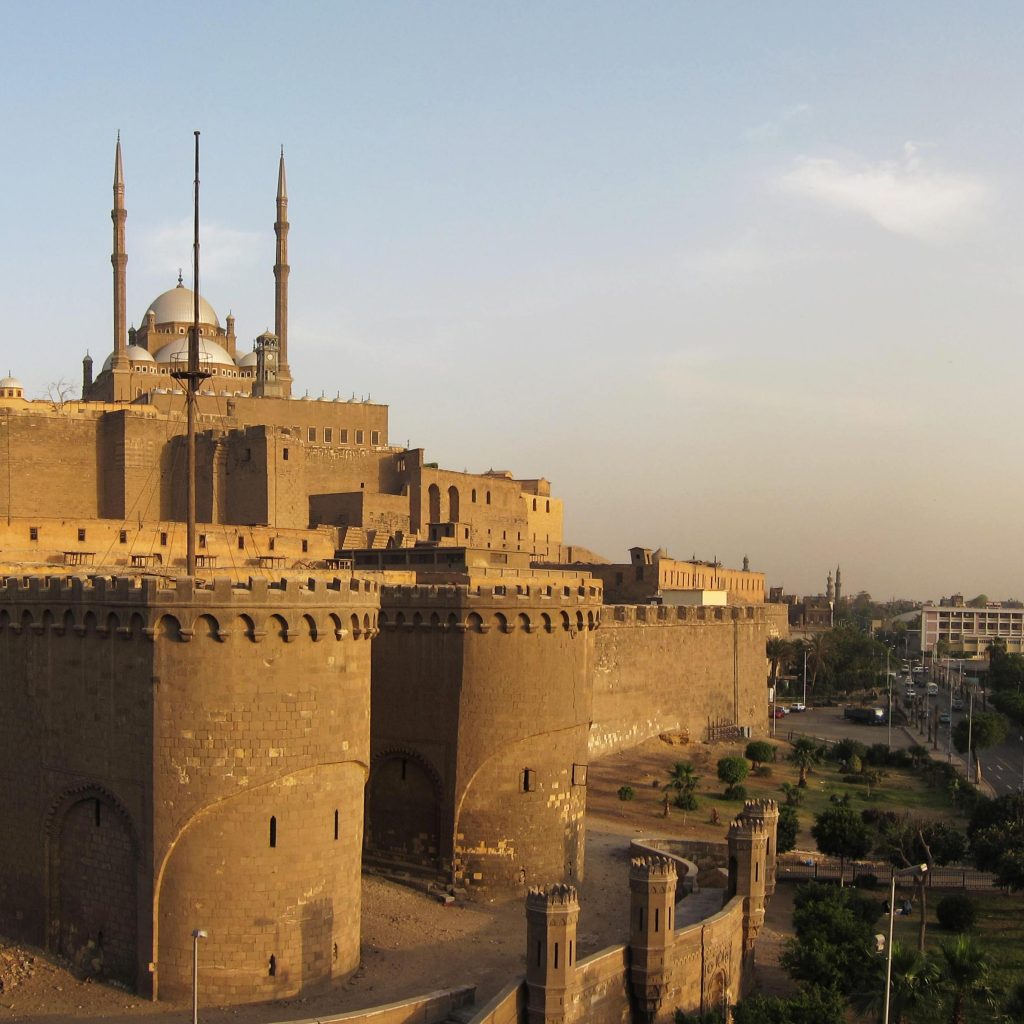
The Citadel of Saladin gives the day its broad historical setting. Its hilltop location, defensive walls and Muhammad Ali Mosque explain why this was Cairo’s political centre for centuries. Allow enough time to take in the setting rather than treating it only as a photograph stop.
Old Cairo: churches, lanes and deeper history
Old Cairo is a compact historic quarter, not one single monument. The Hanging Church and other accessible churches sit close to the remains of Babylon Fortress, creating a useful contrast with the Islamic Cairo of the Citadel. Modest dress and a respectful pace are appropriate, and access to individual churches can change for services or local arrangements.
Khan el-Khalili: atmosphere rather than a shopping obligation
Khan el-Khalili works best as the final walking stop. The value is in the market’s architecture, lantern-lit lanes, workshops and lived atmosphere; guests should feel free to browse, pause for a drink or simply walk with their guide. Purchases are personal choices, not a required part of the itinerary.
Who should choose this Cairo route?
- First-time visitors who have, or plan, a separate Giza and museum day.
- Travellers interested in Cairo’s Islamic and Coptic layers as well as ancient Egypt.
- Guests who prefer a private, route-led day over an unstructured city drive.
How much time should you allow?
Allow a full day, usually around seven hours door to door, with room for traffic, security, walking and current access. Trying to add Giza, the Grand Egyptian Museum and Old Cairo into one day usually reduces the experience at every stop. For a wider view of how Cairo fits your trip, read how many days you need in Cairo and Giza.
If this is the right side of Cairo for your visit, our private Old Cairo, Citadel and Khan el-Khalili tour provides hotel pickup, a private Egyptologist and a route adjusted to current access.



Post Discussion