
Planning Dendera and Abydos from Luxor starts with one decision: combine both temples only when you can protect a full day, want two contrasting temple experiences, and can keep the evening free. Choose Dendera only when your Luxor time is tighter, you prefer less road time, or comfort matters more than covering both sites. The combined route can be rewarding, but it should not be treated as an extra stop around another fixed Luxor plan.
Abydos is the more distant anchor, while Dendera sits on the return direction toward Luxor. That makes an Abydos-first order useful in many plans, but not automatic: the final order still depends on current site access, the confirmed departure, road conditions, and the travellers’ pace on the requested date.
Dendera and Abydos together, or Dendera only?
| Planning question | Dendera and Abydos | Dendera only |
|---|---|---|
| Best fit | Travellers with a protected day who want two distinct temple visits beyond Luxor’s standard East and West Bank routes. | Travellers with a shorter Luxor stay, a lower tolerance for road time, or a preference for one focused temple visit. |
| Pace | A long, single-purpose road day with two site visits and a planned pause. | A simpler out-and-back plan with more room to slow down at Dendera or return earlier. |
| What you gain | The Temple of Seti I at Abydos and the Temple of Hathor at Dendera in one route. | Dendera’s Hathor temple without committing to the farther journey to Abydos. |
| What to protect | The departure, site access, rest plan, and evening after the trip. | Enough time for Dendera itself rather than treating it as a rushed add-on. |
If this would be your only sightseeing day in Luxor, first compare it with the East Bank or West Bank. Dendera and Abydos usually makes more sense after the main Luxor priorities have their own space.
Why an Abydos-first route is conditional
Starting with Abydos can protect the farther visit while energy is highest, then place Dendera on the return direction to Luxor. It also reduces the risk of reaching the distant site only after spending longer than expected at the first stop.
That logic is a planning default, not a promise. Site openings, access arrangements, road conditions, pickup details, heat, and guest comfort can change the best order. Before departure, confirm the two named temples, the planned sequence, and the return expectation for that date. Do not attach a flight, balloon ride, or another fixed evening commitment unless the current route has been checked around it.
How the two temple visits differ
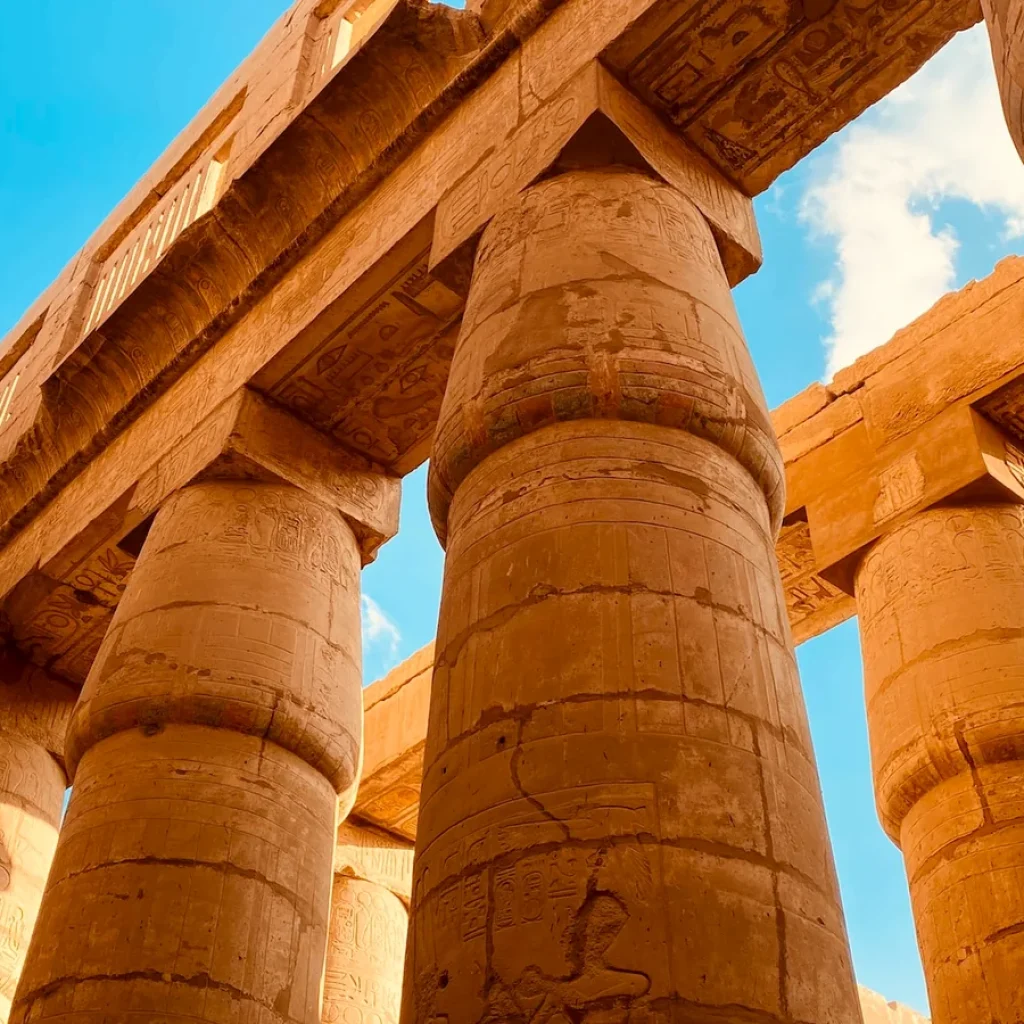
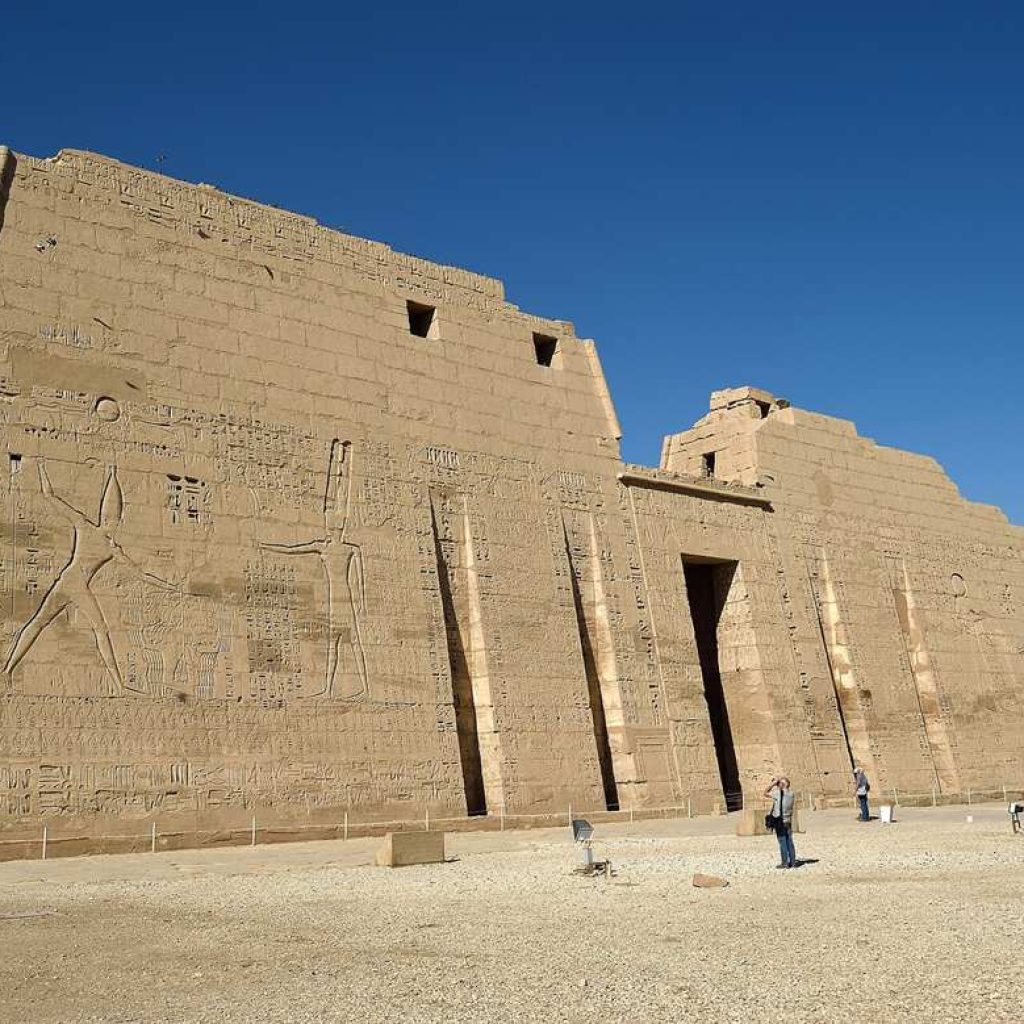
Dendera’s main attraction is the Temple of Hathor. Its Hathor-headed capitals, relief bands, and monumental entrance create a different visual experience from the major temples inside Luxor. It works well as a focused single-site outing or as the second stop in the combined route.
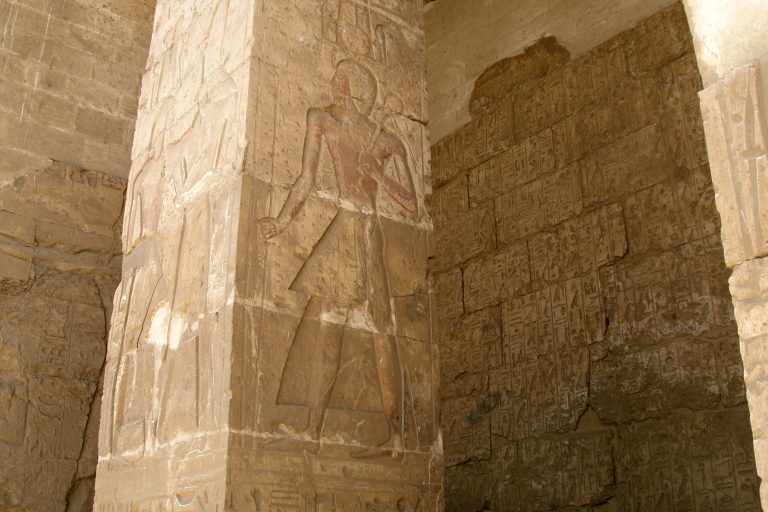
At Abydos, the Temple of Seti I is the central visit. Its carved reliefs and inscription fields reward time and context, which is why the site should not become a hurried photo stop at the far end of the day. Special-access areas or separately controlled spaces must never be assumed; current access should be checked for the requested date.
Private route or independent planning?
Both approaches require current checks. The practical difference is who coordinates them.
- Private planning: one confirmed plan can coordinate the pickup point, vehicle, guide, route order, admissions, pause, and return. The exact inclusions still need to be stated in the dated confirmation.
- Independent planning: you keep control of the arrangement, but you need to verify current transport, site access, admission method, driver waiting and return terms, and where a realistic rest or meal pause fits.
Neither format removes the need to verify the day. If you want to compare the route Egypt Story currently offers, use the Dendera and Abydos temples tour from Luxor as the single matching commercial path; its dated confirmation, not this guide, controls the operational details.
Comfort and accessibility questions to ask
This is a long road day with repeated vehicle time and walking at archaeological sites. Accessibility can vary by the exact area open, surface, steps, distance from the vehicle, and the assistance a traveller needs. The guide should not be read as a step-free or mobility-access promise.
- How much walking and standing is expected at each temple?
- Are steps, uneven surfaces, or restricted areas relevant to the planned visit?
- Where are the realistic toilet, water, shade, and meal pauses?
- Can the confirmed vehicle, seating, and boarding arrangement meet the traveller’s needs?
- Should one temple, a shorter visit, or a different Luxor day be chosen for comfort?
Share mobility needs, children’s seating needs, and pacing preferences before confirmation so the route can be checked rather than assumed.
What to confirm before departure
- The exact pickup point and the expected return window.
- The current opening and access status of both named temples.
- Whether Abydos-first still makes sense for the requested date.
- What standard admissions cover and whether any special-access area is excluded.
- The guide language and who is responsible for tickets.
- The planned water, toilet, rest, and meal arrangements.
- The vehicle and seating details relevant to the party.
- Any evening, flight, cruise, or balloon commitment that could make the day too tight.
Prices, opening times, and access rules can change. Confirm them against dated evidence instead of relying on an undated article or an old itinerary screenshot.
Where the day fits in a Luxor stay
The combined route is strongest when Luxor already has enough time for its core temples and tombs, and when the next morning does not depend on a late or tightly timed return. A Dendera-only plan is the better trade-off when the traveller wants one different temple without giving the whole day to the farther route.
If you are still choosing among local and longer excursions, compare the current Luxor day tours by route and pace. Keep the decision tied to the time you actually have rather than the number of sites you could theoretically fit.
A practical decision
Choose both temples for depth and contrast, not because two sites automatically make a better day. Choose Dendera alone when a shorter, calmer plan will protect the rest of your Luxor stay. Whichever route you prefer, confirm current access, order, comfort requirements, and the return plan before treating it as fixed.
Featured and social Dendera image: “Façade temple d’Hathor Dendara” by Nawel yh, via Wikimedia Commons, licensed under CC BY 4.0. Cropped and resized by Egypt Story Tours.

Post Discussion