
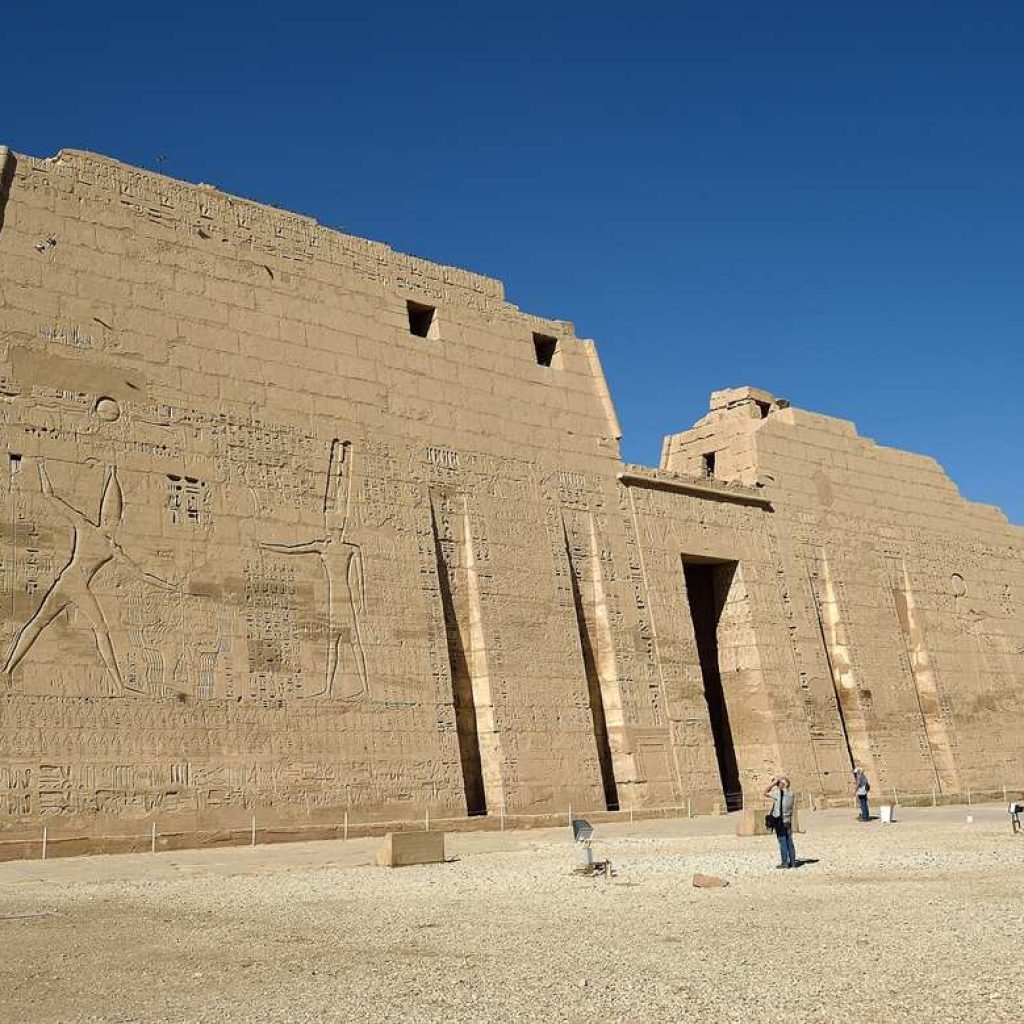
Habu Temple, usually called Medinet Habu, is the mortuary temple of Ramesses III on Luxor’s West Bank. Its reliefs and temple layout reward a visit focused on looking closely. Choose it for a temple-centred day, or decide how it fits beside the tombs and other West Bank sites you want to see.
What is Medinet Habu?
The main temple served the funerary rituals of Ramesses III and the worship of Amun. Its decoration includes royal military scenes, including the Sea Peoples, alongside religious imagery. It is more than a monument to a single battle.

What to look for in the temple complex
The entrance, courtyards and reliefs
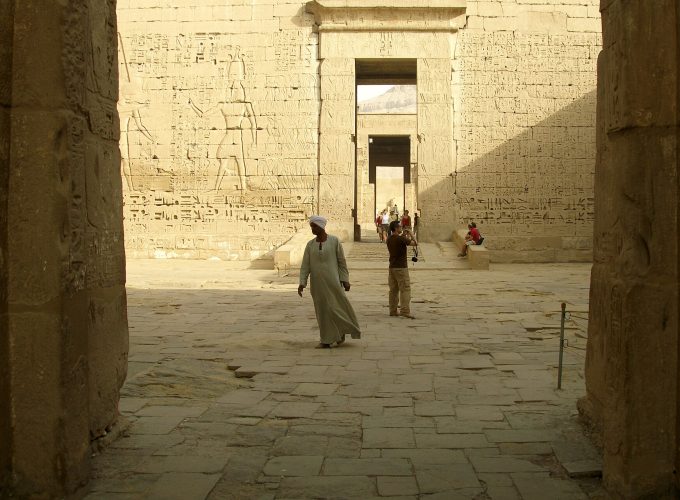
The Ministry of Tourism and Antiquities describes a sequence from the eastern High Gate through pylons, courtyards and columned halls. Rather than rushing from photograph to photograph, ask your guide to help you distinguish the royal and religious scenes.
The earlier temple and other buildings
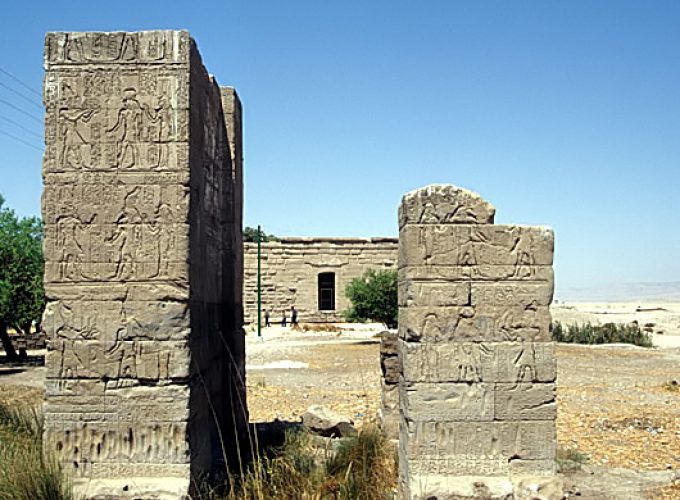
An earlier temple in the surrounding precinct is associated with Hatshepsut and Thutmose III. It is a separate part of the site’s longer history. The complex also includes remains of a royal palace, storehouses and administrative buildings.
For the broader setting, read our Luxor West Bank guide. Keep the roles of the different sites clear when choosing a day: a temple-focused route and a tomb-focused route offer different experiences.

Plan the visit around your interests
If the reliefs are a priority, leave room to stop and discuss them. If you mainly want an introduction to the West Bank, compare the whole day’s programme before deciding which additional sites to include. Adding every nearby attraction can leave less time for the place you most wanted to visit.
Tell us where you are staying or which Nile cruise you are joining, as well as your travel date and preferred pace. Your pickup location matters when planning the start and return, even when every stop is described as being in Luxor.
Check the Ministry’s current Medinet Habu visitor information for opening and admission details. When comparing tours, read the admission inclusions for that route rather than assuming that every West Bank entrance is included.

Choose a route that includes Medinet Habu
Our private Ramesseum, Medinet Habu and Deir el-Medina tour combines three named West Bank stops. Compare its programme and inclusions if your interests extend beyond the classic Valley of the Kings route.
Another option is the Deir el-Shelwit, Medinet Habu and Malkata route. Read its specific visit details before choosing. You can compare both with the wider collection of private Luxor day tours.
FAQs
Are Habu Temple and Medinet Habu the same place?
Yes. In this guide, Habu Temple refers to the main mortuary temple of Ramesses III at Medinet Habu.
Is Medinet Habu included in every West Bank tour?
No. Check the named stops on the specific programme. A tour of the Valley of the Kings and Hatshepsut Temple should not be assumed to include Medinet Habu.
Should I combine it with other temples or with tombs?
Choose according to your interests and the time you want at each site. Use the route descriptions above to compare a temple-centred day with a broader West Bank plan.
What should I tell Egypt Story Tours when enquiring?
Share your travel date, group size, pickup location and the sites that matter most to you. Mention any timing constraints so we can discuss a suitable route.

Post Discussion